Mrs. Micawber
David CopperfieldMrs. Micawber, also known as Emma, is Wilkins Micawber’s wife and the determined custodian of a household repeatedly unsettled by debt. Her own account of hardship mingles formal, spirited declarations with practical acts: she takes in David Copperfield as a lodger, parts with family valuables, and refuses to abandon her husband. Through her, financial crisis is shown not only as Mr. Micawber’s predicament but as a burden borne by a wife managing children, dwindling provisions, and uncertain prospects. Her affection for David turns that difficult household into one of the first places where he is treated as a friend rather than merely a child in need of work.
Household and Circumstances
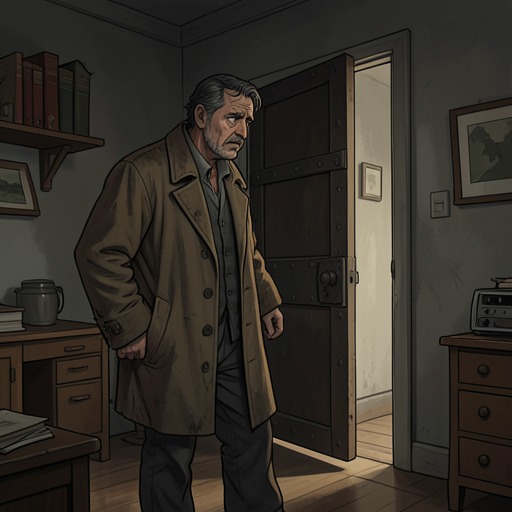
When David reaches the Micawbers’ home in Windsor Terrace, he finds a shabby house making a show of respectability. Its first floor is unfurnished, and the blinds are kept down to mislead the neighbours. Mrs. Micawber is in the parlour with one of the twins at her breast; she observes that she scarcely ever sees both twins away from her at once. The detail makes the demands of family life visible within a home already pressed by Mr. Micawber’s financial difficulties.
Taking David in as a lodger is, she explains, a step she had not expected to take before marriage. She had lived with her parents, and the necessity of renting a room brings her private feelings into conflict with the family’s need for money. Her manner is candid about that change in circumstance: domestic pride remains, but it cannot take precedence over the immediate problem of keeping the household going.
Scarcity becomes concrete in her description of the larder, which contains little more than the heel of a Dutch cheese, unsuitable for a young family. Mrs. Micawber is accustomed to the language and expectations of her parents’ home, and her slightly formal way of describing an empty cupboard sits beside the blunt fact that there is nothing to eat. The contrast gives her speech its characteristic mixture of social polish and material distress.
Managing Debt and Staying with Wilkins Micawber
Mrs. Micawber describes how she has secretly borrowed against the family plate: six teaspoons, two salt cellars, and a pair of sugar tongs. These are not disposable luxuries to her. She recalls their association with her parents and says the transactions are painful, while recognizing that the twins and the household’s needs leave little choice. She also points to a few remaining objects that might be sold, but asks David to help because she does not trust the household’s workhouse girl, Clickett, with the task and believes Mr. Micawber would not willingly part with them himself.
Her loyalty is clearest when she recalls that her pearl necklace and bracelets, inherited from her mother, were sold for less than half their value, while her father’s wedding gift of coral was given away for nothing. She knows that Mr. Micawber initially concealed the extent of his difficulties, but allows that his optimistic disposition may have made him expect to overcome them. Her response is not to deny the cost or the concealment: she insists that she will not desert him. The declaration gives her devotion a practical and emotional weight, rooted in sacrifices she has already made.
When Mr. Micawber’s difficulties reach a crisis, he is arrested and taken to the King’s Bench Prison. Mrs. Micawber’s circumstances are implicated in the arrest: the financial trouble that has already depleted household goods now separates the family from ordinary domestic life. During a visit, Mr. Micawber and David cry together, after which he gives David his rule for living within one’s income: a person earning twenty pounds a year and spending nineteen pounds, nineteen shillings and sixpence may be happy, whereas spending twenty pounds and a penny produces misery. The small arithmetic turns his experience into a maxim, even as he immediately borrows a shilling for porter and gives David a written order on Mrs. Micawber. His capacity to recover his spirits after distress remains part of the scene’s comedy; it does not erase the real strain his family faces.
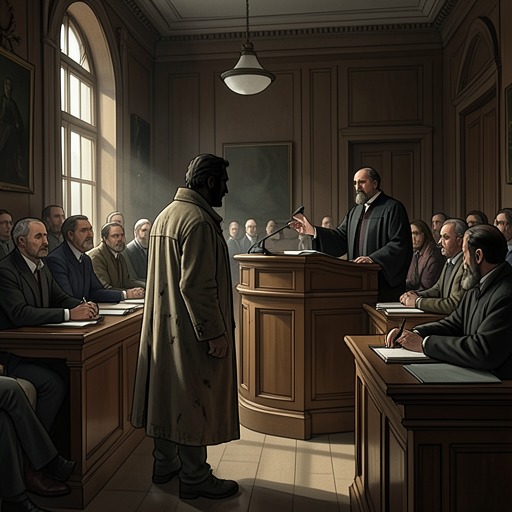
Mrs. Micawber reports that Mr. Micawber is discharged under the Act after his petition is heard. The creditors are not uniformly vindictive: even the boot-maker says in court that he bears no malice but wants repayment. Release ends this episode of confinement, but it does not settle the family’s continuing need for a viable source of support.
Affection for David Copperfield
David’s lodgings place him close to the Micawbers’ daily difficulties, and Mrs. Micawber remembers his presence with gratitude. She later tells him that, when she thinks back to the period of Mr. Micawber’s troubles, she also remembers David’s considerate conduct. She distinguishes his place in the household from that of a paying lodger: he had been a friend. Her words recognize an attachment formed through shared exposure to hardship, rather than through a formal family bond.
As the Micawbers leave, Mrs. Micawber sits at the back of the coach with the children while David watches from the road. She beckons him up, puts an arm around his neck, and kisses him with an expression he understands as motherly. The farewell is brief, since he has to get down before the coach starts, but it changes the emotional meaning of his stay: the household that had needed his rent has also offered him tenderness. Mrs. Micawber’s gesture answers his loneliness without pretending that either of them can remain together. She is returning, he supposes, to St. Luke’s workhouse, while he goes back to work at Murdstone and Grinby’s warehouse.
Later Movements and Recurrent Financial Strain
Mrs. Micawber later reappears travelling with her husband. He tells David that she is recovering and that the twins have been weaned; she is now his travelling companion. Their renewed meeting recalls the earlier bond between the Micawber household and David, whom Mr. Micawber describes as a worthy friend. Mrs. Micawber also explains why the family’s hopes of employment have not worked out as expected. Her family’s local influence could not obtain a Custom House position for Mr. Micawber, and she believes the relatives would rather not employ someone of his abilities. The Plymouth branch of her family receives the couple and their children coolly, despite Mr. Micawber’s recent release from captivity.
The family returns, and Mrs. Micawber consults other branches of her family about what course her husband should take. Her insistence that he must take some course is grounded in the practical needs of a household of six, not counting a domestic servant: it cannot live on air. She thus occupies a recurring role between Mr. Micawber’s grand expectations and the immediate arithmetic of feeding and supporting a family. Her efforts do not guarantee security, but they keep the question of livelihood in view when his hopes, setbacks, and plans threaten to displace it.
A later visit brings a different balance between distress and hospitality. David sympathizes with the Micawbers and wishes he had enough money to lend them what they need. Mr. Micawber alludes to the possibility of shaving materials as a last resort, prompting Mrs. Micawber to embrace him and plead that he remain calm. His distress passes quickly enough for him to order a kidney pudding and shrimps for breakfast. The episode sets her protective response beside his familiar reversals of mood, making their partnership a repeated negotiation between genuine anxiety and buoyant performance.
That evening, the meal is notably abundant: fish, roasted veal, fried sausage-meat, partridge, pudding, wine, and strong ale. Mrs. Micawber makes a bowl of hot punch, and, as the drink disappears, the gathering becomes more convivial. She joins Mr. Micawber and David in singing Auld Lang Syne; they link hands around the table and are moved by the song despite not understanding one of its phrases. Her part in the scene is active and hospitable, offering a moment of fellowship that stands in contrast to the family’s precarious finances without resolving them.
A later letter shocks David into hurrying toward the hotel to comfort Mr. Micawber. Before he arrives, he sees the couple on the London coach: Mr. Micawber appears tranquil, smiling at his wife’s conversation, eating walnuts, and carrying a bottle in his breast pocket. David decides it is better not to interrupt them and feels relieved that they have gone, although he continues to like them. The abrupt contrast between the alarm raised by the letter and the couple’s composed appearance preserves the uncertainty that surrounds their crises; the episode establishes neither the letter’s contents nor a lasting solution to their financial condition.
Character and Narrative Significance
Mrs. Micawber’s resilience lies less in control of events than in her repeated refusal to withdraw from them. She acknowledges the losses, embarrassment, hunger, and uncertain employment that accompany her husband’s debt, yet continues to plan, consult relatives, manage what can be sold, and stand beside him. Her formal explanations and confident declarations can be comic, especially against the plain facts of an empty larder or a household unable to live on air. But the humour rests on recognizable pressures, and her practical concern keeps those pressures from becoming merely a backdrop to Mr. Micawber’s performance.
Her bond with David adds a distinct emotional dimension to that role. She is grateful for his kindness when he is a lodger and later treats him with maternal affection at their parting. These gestures make her household a temporary source of belonging in a period when David is vulnerable and isolated. Mrs. Micawber is therefore both a participant in the Micawbers’ recurring financial misfortunes and one of the people who gives David care within them; her loyalty to her husband and warmth toward the boy are the defining continuities of her appearances.